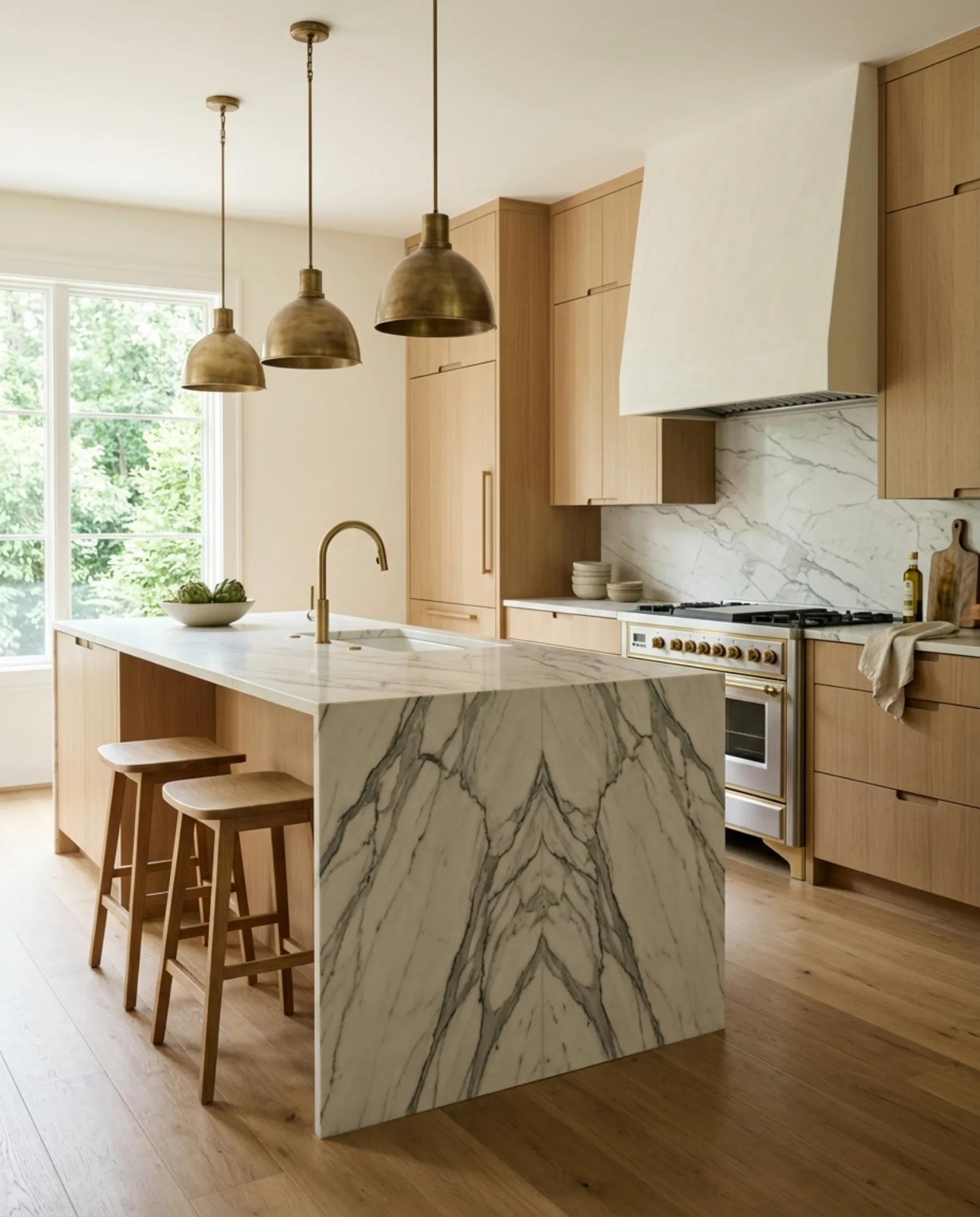
The kitchen has long held a position at the center of residential life. In Atlanta's most refined homes, from Buckhead estates to Alpharetta new builds, it is also the room that receives the most considered design attention. A luxury kitchen remodel is not simply a matter of selecting expensive finishes. It is a discipline that demands a thorough understanding of how materials, spatial flow, and appliance technology interact to serve both daily function and long-term design integrity.
Defining luxury in a kitchen context
Luxury in kitchen design is not defined by a price point alone. It is defined by the degree to which every element, the cabinetry construction method, the stone slab selection, the appliance specification, the lighting layering, has been chosen with intentionality and precision. A kitchen that costs a significant sum but lacks coherence is not a luxury kitchen. One that reflects a disciplined vision from layout to hardware finish is.
Atlanta homeowners with discerning tastes increasingly recognize the distinction. The city's design culture has matured considerably, particularly in neighborhoods like Sandy Springs and Buckhead, where new construction and whole-home renovations routinely incorporate the same standard of finish found in nationally recognized projects. Local design firms working at this level bring both technical fluency and aesthetic judgment to each commission.
Custom cabinetry, the structural foundation of the design
In a high-end kitchen, custom cabinetry is the single most consequential decision. It is the visual anchor, the primary storage system, and the element that sets the tolerance for everything else in the space.
Full custom cabinetry, as opposed to semi-custom or stock lines, allows the designer and client to specify every dimension, material, interior configuration, and finish independently. This is particularly important in Atlanta homes that feature irregular floor plans, vaulted ceilings, or architectural details that resist standard sizing. A cabinet maker working to custom specifications can account for every condition, ensuring that the installed product fits the space with precision rather than approximation.
Door profiles deserve careful consideration. Shaker-style doors remain popular across Atlanta's residential market because they read as both traditional and contemporary depending on the surrounding palette. However, flat-panel doors have gained significant ground in new construction, particularly in homes with a cleaner, more restrained architectural language. Integrated hardware, meaning doors and drawers that open via a push mechanism or recessed grip rather than an applied pull, has also become a hallmark of the most refined kitchen interiors.
Interior fittings matter as much as the exterior presentation. Soft-close hinges and drawer glides are table stakes at this level. Beyond that, pull-out spice organization, custom drawer inserts for utensils and cutlery, and appliance garages for small countertop equipment all contribute to a kitchen that functions as well as it looks.
High-end appliance selection
Professional-grade appliances have become standard in Atlanta luxury kitchens, but the decision process extends well beyond brand recognition. The key question is how each appliance integrates into the spatial and design logic of the kitchen.
Column refrigeration, separate refrigerator and freezer columns rather than a combined unit, is now common in premium kitchens because it offers greater configurability and allows the appliance footprint to align with the cabinetry layout. When integrated with custom panel fronts, column refrigeration can disappear entirely into the cabinet run, preserving the visual continuity of the space.
Range selection is one of the most personal decisions in a kitchen design. Dual-fuel ranges, which pair a gas cooktop with an electric convection oven, remain popular among serious home cooks for the precision they offer across both functions. Induction cooktops have gained considerable traction in Atlanta's luxury market, particularly in open-plan homes where ventilation constraints or a desire for a cleaner aesthetic make a gas range less practical.
Ventilation is an area that receives insufficient attention relative to its design impact. A range hood is often the largest single visual element above the cooking surface, and its proportion, material, and profile must be resolved as carefully as any other cabinetry detail. Custom hood enclosures clad in the same finish as the surrounding cabinetry maintain visual coherence. Architectural hoods in plaster or natural stone make a deliberate material statement.
Stone selection and countertop specification
Natural stone slabs are the preferred countertop material in Atlanta's high-end residential kitchens, and the selection process warrants serious attention. Quartzite has largely replaced marble as the stone of choice for primary kitchen surfaces because it offers comparable visual richness with substantially greater hardness and resistance to etching. Calacatta and Statuario quartzites, with their white grounds and bold veining, have become defining features of the refined Atlanta kitchen.
The slab selection process should always be conducted in person at a stone yard. Digital images cannot accurately represent the movement, depth, and variation of a natural slab. A designer with experience in stone selection can identify a slab that not only reads well in isolation but also works in proportion with the specific kitchen dimensions and cabinetry layout.
Waterfall countertop edges, where the stone continues down the side of an island to the floor, have become a favored detail in contemporary Atlanta kitchens. Executed well, with a slab that has been bookmatched to carry the veining continuously around the corner, this detail has genuine design impact. Executed poorly, with a stone that reads differently on the vertical plane or seams that do not align, it detracts from the overall quality of the space.
Lighting as a design layer
Kitchen lighting in a luxury renovation is a multi-layer system, not a single fixture decision. The three layers, ambient, task, and accent, each serve a distinct function and must be coordinated to work together.
Ambient lighting establishes the base level of illumination and sets the tone for the space. Recessed fixtures with a high color rendering index ensure that stone, wood, and finish materials read accurately. Dimmable LED systems allow the ambient layer to shift from a bright, functional level during meal preparation to a warmer, lower setting during entertaining.
Task lighting is critical at the countertop plane. Under-cabinet fixtures, mounted at the front of the upper cabinet to minimize shadow, are the most effective solution. LED strip lighting, when properly diffused and positioned, provides even illumination across the full working surface.
Accent lighting, inside glass-fronted cabinets, above open shelving, or beneath floating elements, contributes depth and visual interest. At the luxury level, these details are planned in the design phase, not added as afterthoughts.
Working with a design professional
The complexity of a luxury kitchen renovation, managing the coordination between cabinetry fabrication, appliance specifications, stone procurement, plumbing rough-in, and lighting design, makes the involvement of a skilled design professional not simply an aesthetic decision but a practical one. An experienced Atlanta interior designer brings vendor relationships, technical knowledge, and a project management framework that reduces the risk of costly errors and ensures the finished kitchen reflects the original design intent.
Firms with a track record in Atlanta's luxury residential market bring an additional layer of context: they understand the specific aesthetic preferences, lifestyle patterns, and architectural conventions that define the city's most distinguished homes.