
Notes on rooms, materials, and the way we live in them.

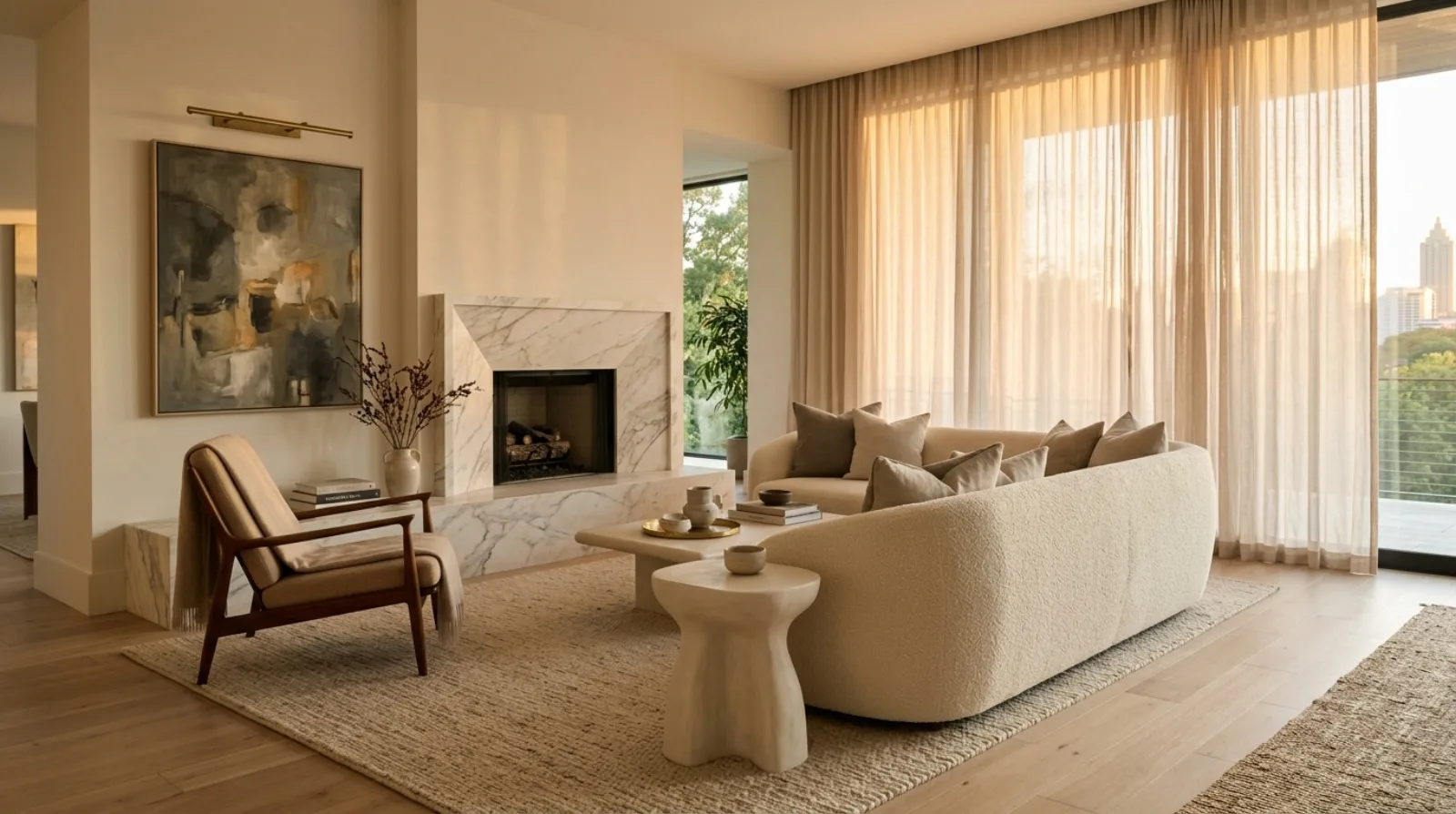
A late-afternoon view of a refined living room with a Calacatta marble fireplace, a sculptural cream boucle sofa, a walnut lounge chair, and brass picture lighting.

About the Magazine

An editorial publication rooted in restraint and read with care.

Learn more

KMH was founded out of a shared desire to publish writing about rooms that feels as good as it looks, honest, balanced, and quietly luxurious. With editors drawn from residential architecture, design history, and material specification, the magazine connects readers to the way they actually live.

Every issue begins with listening. We take the time to talk with designers, builders, and clients about daily rhythms, personal values, and individual style. From there, we shape long-form essays that reflect how rooms work quietly, beautifully, and intuitively across decades, not seasons.

II
Issue Two Spring 2026
Editor at a worktable with stone samples and fabric swatches.
Built-ins / Essay / May 1, 2026

The value of custom built-ins and bespoke furniture in residential design.
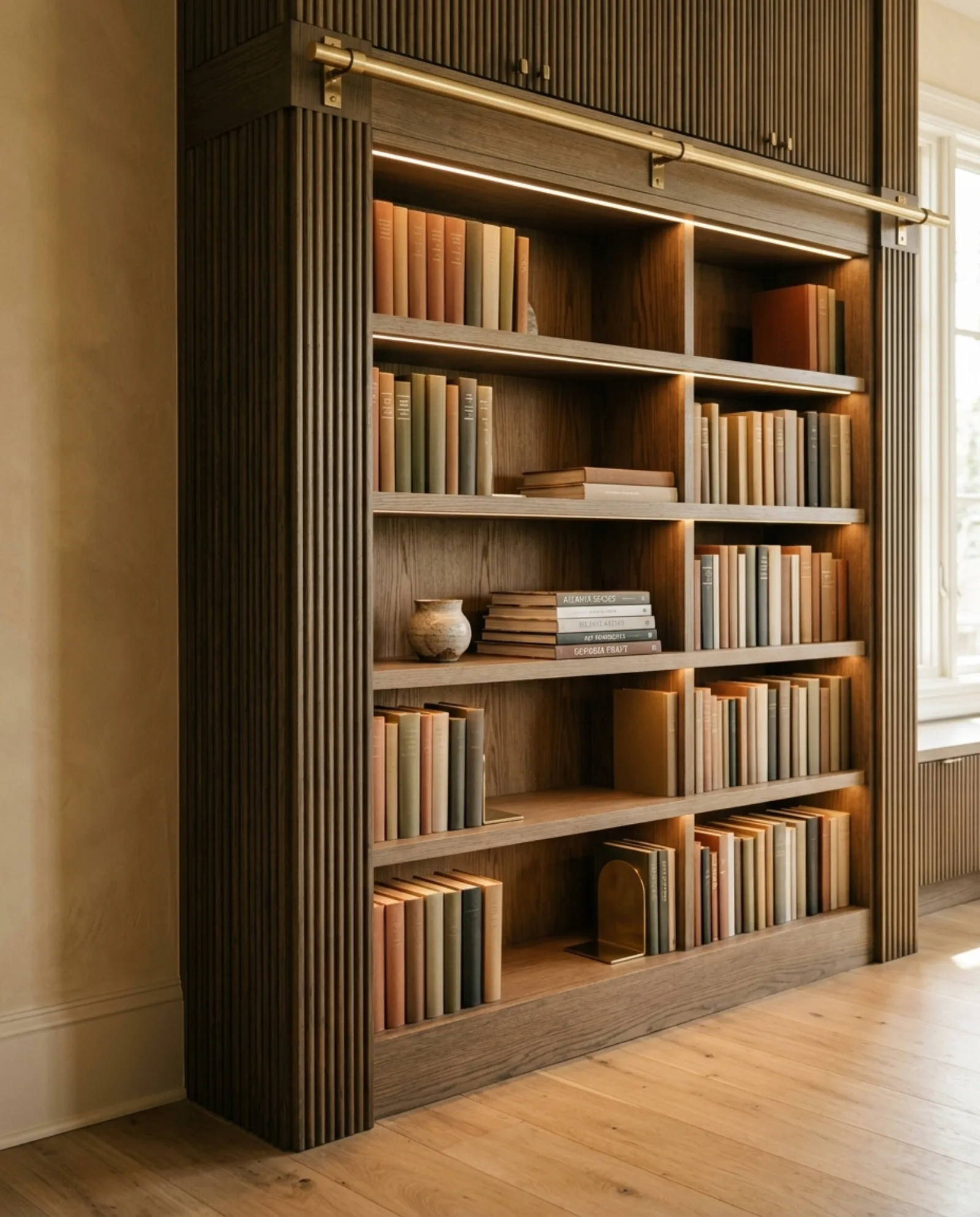
A custom fluted white oak library wall with brass library rail and integrated linear lighting.

There is a clear line between a home that is well-furnished and one that is genuinely designed. The difference is not simply a matter of expenditure or even of taste. It is a matter of specificity, the degree to which the elements within the space have been conceived for that space and no other. Custom built-ins and bespoke furniture are the clearest expression of that specificity, and they represent among the most durable investments a homeowner can make in the quality of their interior environment.

In Atlanta's luxury residential market, where clients bring high expectations to projects across Buckhead, Sandy Springs, and Alpharetta, custom millwork and purpose-made furniture are not exceptional features. They are increasingly the baseline standard against which the quality of a design is measured.

What custom built-ins actually accomplish

The functional argument for built-in cabinetry and millwork is straightforward: a built-in can occupy space that a freestanding piece cannot, it can be sized precisely to the room's proportions, and it can perform storage and display functions simultaneously without the visual clutter that multiple freestanding pieces tend to accumulate.

The design argument is equally compelling. A well-designed built-in resolves the relationship between architecture and furniture by making them the same thing. A library with floor-to-ceiling shelving on two walls does not simply store books, it transforms the architectural character of the room. A window seat built into a bay defines that bay as a destination, creating a spatial experience that no placed furniture can replicate.

In Atlanta's older homes, built-ins often preserve or restore architectural details that were part of the original construction but have been lost to prior renovations. A fireplace flanked by built-in cabinetry with period-appropriate molding profiles restores a room's symmetry and sense of purpose. In new construction, built-ins provide the architectural depth that otherwise requires years and multiple renovation cycles to accumulate.

Bespoke furniture, the case for commissioning

The market for high-quality furniture has never been deeper than it is now. Design trade sources, antique markets, and international vendors offer a range of pieces at every quality level. Yet experienced designers and their most discerning clients still regularly commission bespoke furniture. The reason is that no catalog piece, however well made, can be what a piece designed for a specific room and client can be.

The case for commissioning is strongest when a room has proportional requirements that no standard piece addresses, when a specific material or finish combination is required that does not exist in the market, or when the room will bear the weight of a single dominant piece whose presence and quality must justify its position. A bespoke piece made by a skilled craftsperson has a quality of presence that is perceptible even to those who cannot identify its source.
Trends / Essay / April 9, 2026

Atlanta interior design trends, blending Southern tradition with modern aesthetics.

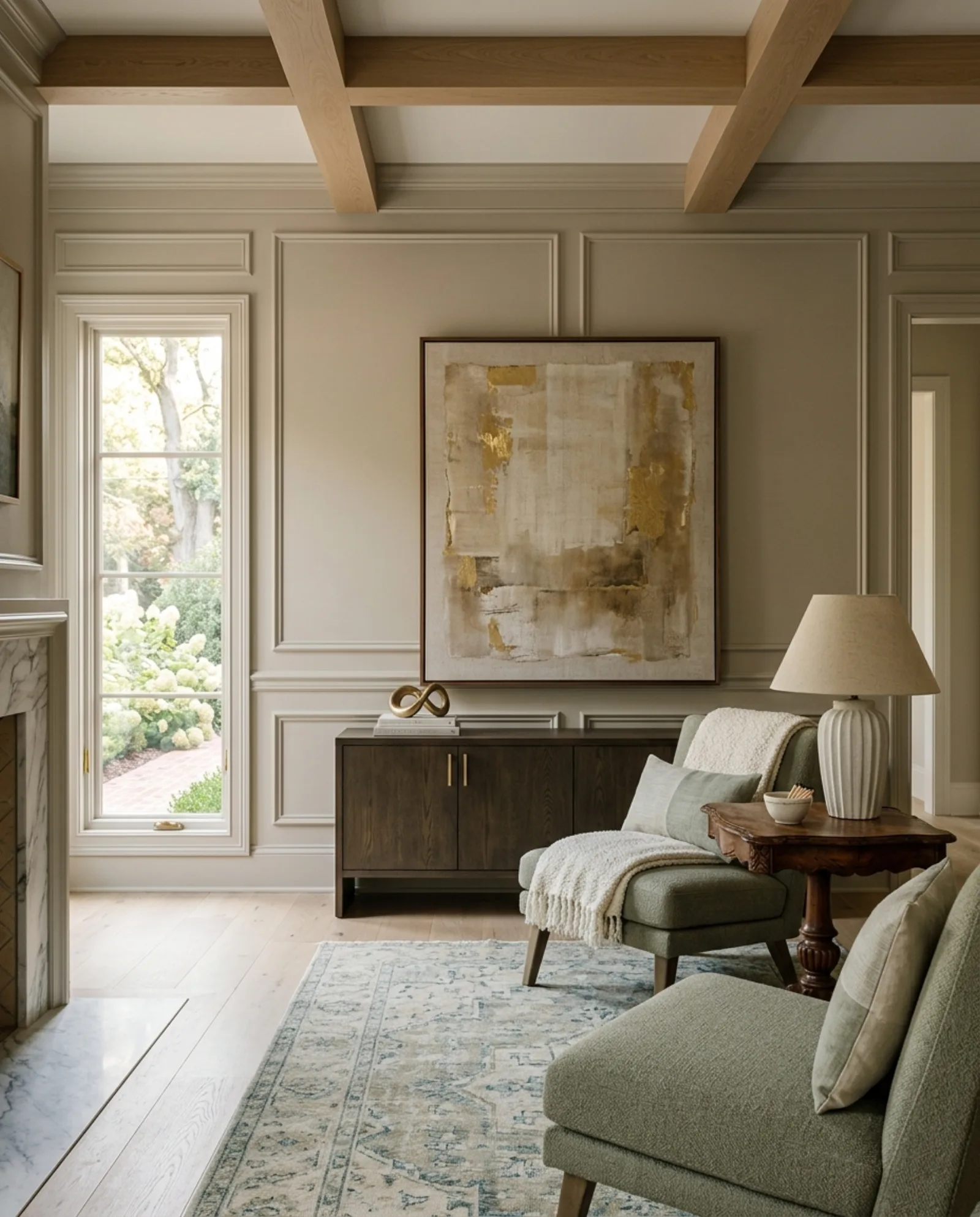
A refined sitting room with paneled millwork, a coffered ceiling, layered linen textiles, and a fluted plaster lamp.

Atlanta occupies a distinctive position in the American design landscape. It is a city with a deep attachment to traditional Southern aesthetics, the formal living room, the covered porch, the symmetrical facade, and simultaneously one of the fastest-evolving residential markets in the country. For interior designers working at the luxury level in neighborhoods like Buckhead, Ansley Park, and Sandy Springs, navigating this duality is the central challenge and the defining creative opportunity.

Understanding current design trends in Atlanta means understanding both the roots of the city's residential character and the forces reshaping it.

The shift toward contemporary sensibility

Over the past decade, Atlanta's luxury residential market has seen a significant shift in client preferences. Younger buyers and move-up purchasers are requesting spaces that retain the material richness and sense of craftsmanship associated with traditional design while shedding the formality and visual complexity that can make traditional interiors feel heavy or dated.

Furniture profiles have become cleaner and lower. Color palettes have shifted toward a more tonal approach, rooms built around a single dominant hue, a warm greige, a muted sage, a soft terracotta, developed across materials and finishes with variety in texture rather than color contrast. Open-plan living, once at odds with the room-by-room formality of traditional Southern homes, has become standard in new construction across the Atlanta metro area.

Millwork as the bridge

One of the most consistent observations among Atlanta's leading interior designers is that millwork serves as the most effective bridge between traditional and contemporary sensibilities. Traditional details such as crown moldings, paneled wainscoting, built-in cabinetry, and coffered ceilings are being reinterpreted with cleaner profiles and wider proportions. A ceiling beam that might have featured an ornate carved profile in a traditional context is now more likely to be a squared, painted box beam that reads as both architectural and contemporary.

This approach allows a home to carry the weight and material presence of traditional design while presenting a face that reads as current. It also ages well: a room built on good millwork bones and restrained decoration will remain relevant far longer than one dependent on trend-specific furnishings and finishes.

Kitchen / Essay / March 19, 2026

Luxury kitchen remodeling in Atlanta, high-end appliances and custom cabinetry.

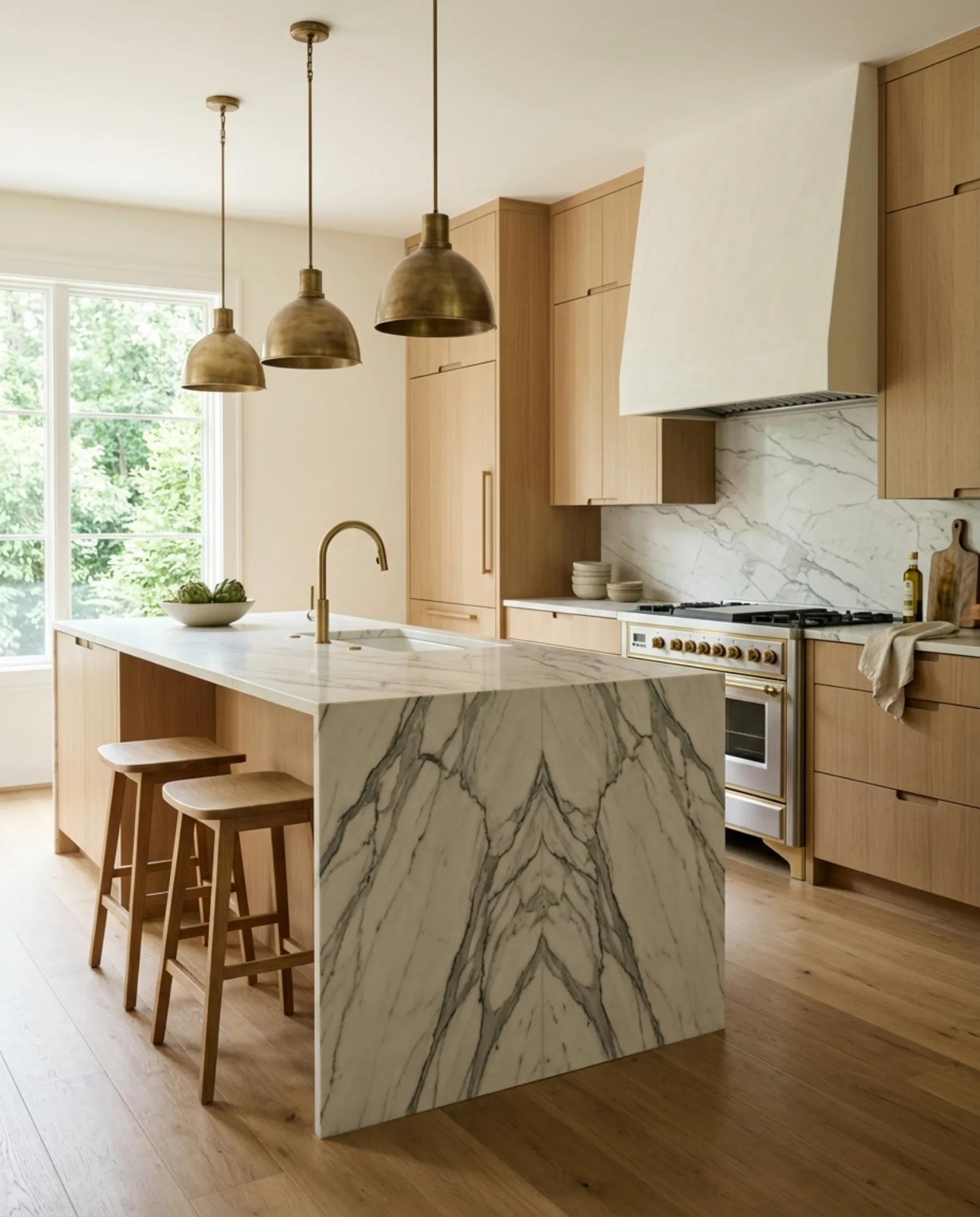
A Calacatta quartzite waterfall island in a custom kitchen with brushed unlacquered brass pendants and white oak rift-cut cabinetry.

The kitchen has long held a position at the center of residential life. In Atlanta's most refined homes, from Buckhead estates to Alpharetta new builds, it is also the room that receives the most considered design attention. A luxury kitchen remodel is not simply a matter of selecting expensive finishes. It is a discipline that demands a thorough understanding of how materials, spatial flow, and appliance technology interact to serve both daily function and long-term design integrity.

Defining luxury in a kitchen context

Luxury in kitchen design is not defined by a price point alone. It is defined by the degree to which every element, the cabinetry construction method, the stone slab selection, the appliance specification, the lighting layering, has been chosen with intentionality and precision. A kitchen that costs a significant sum but lacks coherence is not a luxury kitchen. One that reflects a disciplined vision from layout to hardware finish is.

Atlanta homeowners with discerning tastes increasingly recognize the distinction. The city's design culture has matured considerably, particularly in neighborhoods like Sandy Springs and Buckhead, where new construction and whole-home renovations routinely incorporate the same standard of finish found in nationally recognized projects.

Custom cabinetry, the structural foundation

In a high-end kitchen, custom cabinetry is the single most consequential decision. It is the visual anchor, the primary storage system, and the element that sets the tolerance for everything else in the space. Full custom cabinetry, as opposed to semi-custom or stock lines, allows the designer and client to specify every dimension, material, interior configuration, and finish independently. This is particularly important in Atlanta homes that feature irregular floor plans, vaulted ceilings, or architectural details that resist standard sizing.

Door profiles deserve careful consideration. Shaker-style doors remain popular across Atlanta's residential market because they read as both traditional and contemporary depending on the surrounding palette. Flat-panel doors have gained significant ground in new construction. Integrated hardware, doors and drawers that open via a push mechanism or recessed grip rather than an applied pull, has also become a hallmark of the most refined kitchen interiors.